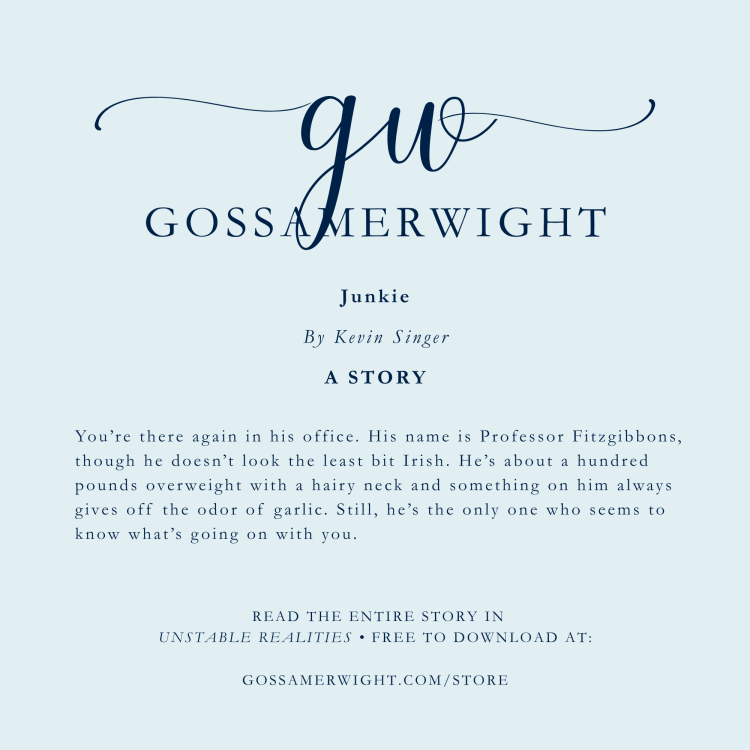
Sometimes it’s all about the first line. Most times I’m writing, getting that first line is like trying to knock through a brick wall with your bare fists. Other times, that first line is delivered straight from God. That was my experience for the opener for Junkie, my short story just published by GossamerWight Press.
It came. It was there. It’s simple and clear and sets up two characters (Nico and the speaker) and the situation. And it’s provocative. Junkie is a loaded word. Junkie can be considered a statement of fact. It can also be a judgment. Sure, some editors might have scoffed at my story because of that first line (and the title), but I did not care. This was the story I was telling.
Junkie is about Scott, a youngish man who is suffering from a syndrome termed TDS, time displacement syndrome. He frequently finds himself reliving scenes from his past, not just in his thoughts, but in his reality. For this loop, he’s caught in a relationship with his ex, Darya. It’s a doomed relationship. He knows where it’s headed, and despite this looping into the past, nothing he does can ever materially change it.
It’s not revealing anything to say that I love all things speculative when it comes to literature, movies and television. As a fan, I think it’s fun, simple as that. As a writer, it gives me more room to play. Metaphors can do a lot of the heavy lifting in storytelling. Metaphors such as…having a man be caught re-living scenes from a failed relationship in real time.
On the most basic non-speculative level, Junkie is basically about how we can sometimes get caught in mental loops from the past, obsessing over things we cannot change, wondering if only. We all do it. Sure, I could have had Scott thinking about all this. But where’s the fun in that?
Instead I made it real. I made it tangible. I also took another literary risk: I told the story in second person.
Second person is the most controversial of all storytelling modes. First and third are easy and familiar. You, however, is not. You unsettles people. They ask, is it me? Am I implicated? Who is this you?
I chose second person for a couple of reasons. First, I did want to immerse the reader into this emotional tilt-a-whirl. But I also wanted Scott to distance himself from his own emotions. Rather than saying I feel, he says you feel. He’s putting those feelings on you (or the proverbial you).
With Junkie I also wanted to play with foreign languages. Darya and Scott can’t communicate very well to begin with. Now throw in a little Farsi, and some high school Spanish. I am a writer. It is my role to find the right words to communicate. But in my real life? Just like all 7 billion humans on the planet, I struggle all the time with finding the right words, not only in terms of relaying them to others, but in identifying them for myself. Scott fails at this as well, but not for lack of trying.
Technically this was a challenging story, between the timelines and point of view, not to mention the challenge of writing about a generic failed relationship. It was work but I’m glad I took it on.
Another thing I am glad about is the fact that I ignored my first decision to NOT submit to the magazine’s call for submissions. The theme was unstable realities, and I told myself that my story didn’t quite fit, so why waste my time? Then I reconsidered, my thinking being, let the EDITOR decide that. And I am glad I did. Turns out, the editors thought I nailed the theme.
So the moral of that story is, when in doubt, submit!
That’s not a criticism. Not in my opinion. You can make anything old and done before work as long as you nail the basics: storytelling, writing, characterization. Those are more important than whether what you’re writing about has been done before.
Undertone, a movie I recently watched, is a great update on a newish horror trope: found footage. The update was clever, the storytelling and mood were solid, but one thing was lacking.
Characterization.
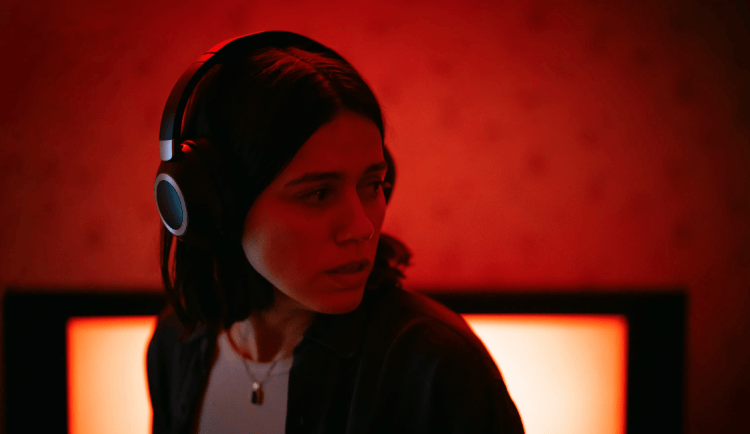
Undertone follows a pair of podcasters, Evy and Justin (who we never see), who focus on the paranormal. Justin’s received a cryptic email with ten files attached. As part of their podcast, they listen to each of the files. This being horror, strange things ensue.
But these strange things only happen to Evy, who is taking care of her dying mother. The entire movie is shot at this one location: her mother’s house. As the podcasters listen to the audio files, which contain nursery rhymes sung backwards revealing hidden messages of violence, demonic activity ensues. File after file, it all gets worse. Until it ends.
What I liked: the intentionally drab cinematography gave Undertone a claustrophobic air. And the concept itself. Summoning of demons is a cliché, but it’s one that endures. I also liked the idea of nursery rhymes as a secret vessel of evil. I don’t know if this an original idea; I can’t remember seeing it used before. And while I had issues with the pacing, there was a solid progression as the danger amped up.
What I didn’t like: the biggest flaw of Undertone was Evy. She’s the protagonist, and the only character we see for twoish hours (aside from her comatose mother), and there is almost no set-up for who she is as a human before the horror ensues. I really needed to see who Evy was, very briefly, before dropping us into the story. I needed some character development just so I could bond with her a little, get to know her, have some sympathy before she’s plunged into the depths of hell. I needed a connection.
Instead we get some care-taking shots and then her sitting down at a table in front of a computer and microphone as she has (meaningful) small talk with the disembodied voice of Justin. I really didn’t know who Evy was, I had no clue who Justin was, so I had almost no investment. And I needed it, because the pre-podcast conversation with the disembodied voice felt wholly unnatural to me. I didn’t believe them because I didn’t know them.
If only they’d spent the first ten minutes setting up a little of who Evy was. I know she’s taking care of her dying mother. Who is she aside from that? What did she set aside to uproot her life and care for her mother? Does she have a boyfriend? We don’t know, and that last question is really annoying because about an hour in, Evy (and the audience) discovers she’s pregnant.
Wait, what?
I suppose I understand why in part we don’t get too much of Evy’s life. Undertone was made for $500k, so the producers were limited (it looks really good for $500k). But still. Seeing as the movie grossed over $20 million, hopefully the director’s next budget will allow for some more character development.
I really wanted to like Undertone, and I do, to a point. There were things I definitely enjoyed, but to a point. For instance, I liked the podcasting idea. I liked that Evy and Justin were only playing roles in their podcast, he the believer and she the skeptic. But I needed something else in their interactions. I don’t know if getting to see Justin would help, or if it was a pacing issue, or if, as I wrote already, a lack of character development for Evy.
The last point to touch on is the issue of theme. Most horror movies are not really about the monster or the threat. They’re about some very human fear. I’m pretty sure Undertone was supposed to be about the fear of motherhood, The demon in question makes women kill their children, born or unborn. Evy was caring for her dying mother, Evy discovers she’s pregnant.
But none of this hit me on an emotional level. I didn’t really feel any of it. Again, I think it’s because I didn’t know Evy. I didn’t know her hopes or fears or what she liked or hated. None of that. Just that she was about to come face to face (or ear to ear) with a demon.
The moral of this tale: character development is vital to telling a good story. Don’t be terrified of it.
The challenge: write a short story in 20 minutes using the following:
Characters: Deep sea diver and a disgraced teacher
Genre: Young adult
Setting: The Everglades
Trope: It seemed like a good idea at the time
POV/tense: 1st/present
And the result:
He calls me Huckleberry. I don’t think it’s funny. My name’s Finn and I got called Huck all the time. Been beating up other kids all my life for calling me that. But not Mister Jim. I’d never beat him up. Truth is he’s too soft for me to do that to him.
“So there’s this money here,” he tells me. Sure I think he’s full of shit but I don’t say that to him because he’s paying me. Not a lot, mind you, but cash is cash.
“Listen, Mister Jim, I know you mean well and all, but this here’s the swamp. Chances are even if there is money out here, it would be all rotted.”
“Never mind that,” he says.
I steer the boat around the mangroves following the map, the one he kept folded up in his billfold. The air’s thick with gnats. The sun’s high in the sky and as we motor through the thickest part of the grove we get some blessed shade.
“Hey, how do I know I can trust you,” I tell him.
Mister Jim scratches his beard. It’s wild and tangled and if it wasn’t for the way he’d ramble on abouut literature I’d have assumed he was a junkie. Hell, he probably is one anyway.”
“You don’t,” he says. “That’s why you’re out here, because you like the danger. Plus you’re a fatherless boy. I can spot them from a mile away.”
I slow the boat. Birds squauk through the humidity. “Just to let you know, I know these Everglades, better than you do. You try anything funny when I’m down there—or when I’m up here—and they’ll never find you.”
“Oh, Huckleberry, listen to you. Do you actually think I’d do anything to you.”
“Yes. Maybe. No.” I stare at his eyes, brown and wet and I wonder what they’ve seen. “So what is it you did?”
“Did?”
“Yeah. You’re a teacher. Out here in the Everglades with a seventeen year old looking for some money supposedly. Why aren’t you in some air conditioned high school classroom?”
He stretches and looks behind him. “They don’t take to you coming into class strung out from a lost weekend. Or a lost week. Or OD’ing during the middle of a class on Hamlet.”
“My mom tried to read some Hamlet to me. She said it was my father’s favorite. I told her if she ever tried to read it to me again I’d burn the house down.”
“And what did she do?”
“She cried,” I tell him. “Not like it was my fault. Shit. I know why he left her. I blame him, of course, but I know exactly why. So are we really looking for money or are you just playing with me, Mister Jim?”
He stretches out on the back of the boat as if its his, as if he owns it, as if all the world belongs to him, and I can’t tell if I hate him or if I’m just fooling myself. “There’s got to be,” he says so softly I can barely hear him.
“So where did this so-called money come from?”
“My brother in law robbed a bank. He hid the cash here. Told me so just before he got himself killed in a wreck.”
I don’t know if I believe him but he’s right. All I care about is the adventure. So I rev the boat and follow his map. A half hour later we get to the tree. There’s a letter carved on it. A big A.
“Yes, yes,” he says. “This is it. Just like he promised.”
I side eye him and get to putting on my wetsuit. Then the tank. He puts a hand on my shoulder. “Aren’t you afraid of alligators?”
“Alligators are the least of my problems in this life,” I tell him.
“Aren’t you afraid of being out here with a strange man all alone.”
Before I tip over the edge I laugh at him. I don’t tell him that he’s the one that should be afraid of me. I don’t tell him there’s a reason that my father disappeared without a trace. No one knows what’s hidden in these waters better than me.
I’ve been on a classic lit kick for some time now. A big part of that is my utter disappointment with books published in the 21st century (with a few exceptions), which seem to either be written by and for fellow MFA grads, or focus too much in the particulars of identity with little regard for storytelling and characterization. To deal with this I’ve been reaching further back in time, figuring that writing that’s survived the decades has to be good. Flannery O’Connor, for one, didn’t disappoint.
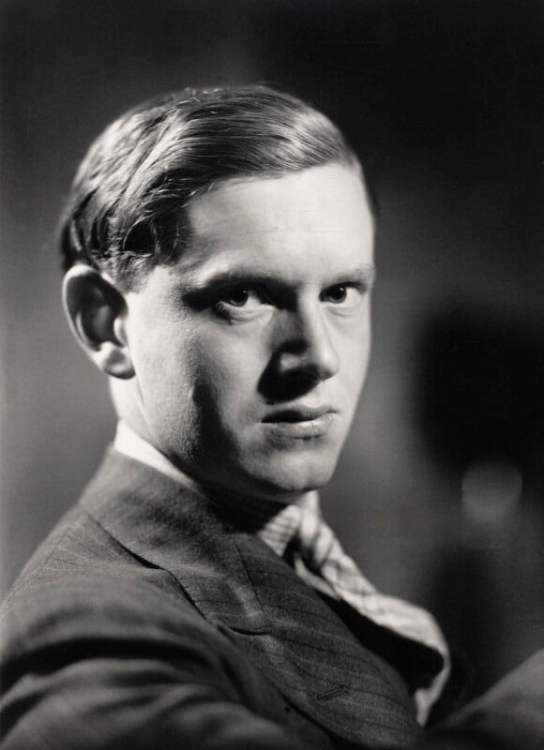
Having just finished Raymond Carver (recommended), I needed a new book, so I chose Evelyn Waugh’s 1945 novel Brideshead Revisited.
I bought it almost cold. All I knew about it was 1) it was about a British aristocrat family, and 2) it was kind of gay.
I was imagining Downton Abbey meets Brokeback Mountain, neither of which I’ve seen. Or maybe something along the lines of Saltburn, which I saw and hated.
I got the book in the mail and I read it fairly quickly (for me), and when I got to the end I was like…huh.
Huh because I didn’t quite get it.
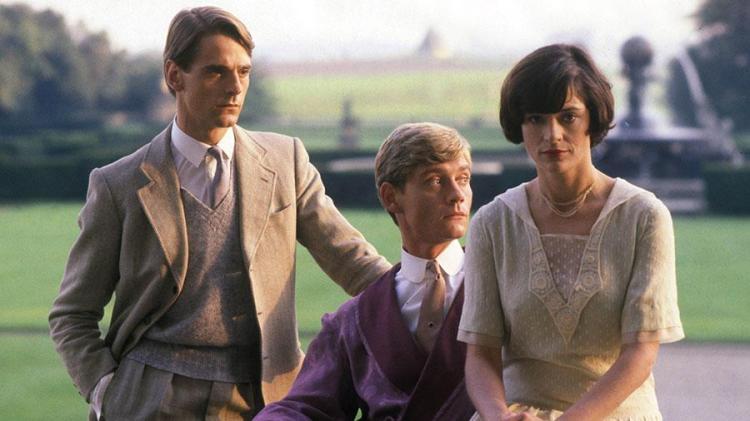
First, a summary. Brideshead Revisited is set in England just after World War I. It follows Oxford student Charles Ryder (the narrator), who befriends the alluring and eccentric Sebastian Flyte. Sebastian is a part of an aristocratic Roman Catholic family, and their estate is called Brideshead. Sebastian brings Charles to Brideshead where Charles soon becomes entangled with the Flyte family—Sebastian’s mother, brother Bridey, sisters Julia and Cordelia, and his estranged father. Over the course of about a dozen years we follow the ups and downs of the Flyte family, all seen through Charles’s eyes.
The story was interesting and well written and also way less gay than I thought it would be. There’s not much said explicitly about Sebastian and Charles’s relationship, though there’s strong implication. Even with that, there was little overt attraction or detailed intimacy between the two. If anything, I read Charles’s attraction as something other than physical. What exactly, I still can’t say, but their relationship, on Charles’s part, read more like a platonic infatuation.
What Sebastian thought of Charles, we don’t know.
Sebastian, as it turns out, is just the catalyst. He’s gone for much of the story. He becomes a drunkard and runs away to North Africa. While Charles doesn’t quite forget him, he moves on with his life. He becomes a successful painter, marries, has a couple of kids, and then leaves his wife for Sebastian’s sister, Julia, who he definitely had a physical attraction to from the get-go. This continues his involvement with the Flytes for a little longer before it all finally ends.
I wasn’t sure what to make of the story as a whole. Much is made of the family’s status as Roman Catholics. The mother, older brother Bridey, and youngest sister Cordelia are committed. Sebastian and Julia, not so much. Sebastian resents his mother and all she represents, while Julia chafes against anything that she perceives as limiting her. That’s what she says, at least. I think it’s something else. She resents that, as a noble, she’s expected to marry a certain class of person, but as a Catholic, her options are severely limited.
Later in the novel, their father, Lord Marchmain, who had converted to get married, but then left his wife and faith, returns from Italy to Brideshead as World War II looms. On his deathbed he repents, which rekindles Julia’s faith, and as a result, she ends her affair with Charles.
The novel was framed as one big flashback. It opens in the early days of WW II with Charles, an officer, being barracked at Brideshead Manor. His reminisces are the story, and at the end, he walks into the Catholic chapel on the ground and prays.
Yep, that’s the end.
I felt like I was missing something obvious about the book.
So I went online and looked for some commentary, someone wiser and smarter than me, who could illuminate the book.
One essay resonated. The writer talked about how it doesn’t matter what the writer may or may not have intended (I knew next to zero about Waugh). She claimed that the text itself is all that matters. And thus, her reading (which she said went against Waugh’s) was that religion is oppressive, and that it’s a shame that Sebastian and Charles couldn’t have been gay and happy together.
Fair enough, but this is such a basic and 2026 reading. Our culture is obsessed with identity politics. Being a part of our culture, I tend to see things through that lens too. But isn’t it limiting? Doesn’t it get boring?
I got curious over her assertion that her reading clashed with Waugh’s intention. So I wanted to know what were his intentions?
Thank God for YouTube. I found a bunch of serious lectures on Brideshead Revisited. Watching them I learned that in his introduction, Waugh stated that the main character is grace: God moving through people. Since I never look introductions, I missed that.
I also learned Waugh himself had converted to Catholicism as an adult, so that was his storytelling lens.
That was the piece I was missing. The book’s not about a short-term romance between Sebastian and Charles, even though that reading is still valid. It’s about the Flyte family’s struggle with their faith with a capital. And even though he shows that adhering to faith can be hard, it’s not meant to be about religion as a tool of oppression.
The attraction of Charles to Sebastian, to the Flytes, and to the manor house, Brideshead, itself, is about Charles being drawn into faith. Late in the book, Cordelia tells Charles that God’s grace is an invisible line attached to people, and God gives a twitch upon the thread to bring them to Him. At the end of the book, Charles prays in the chapel. Throughout the story he was a committed agnostic, and was often hostile to the Flyte’s faith, especially Julia’s. But there he was in the chapel. His thread had been twitched.
When you unpack the story through Waugh’s eyes there’s more to discover. The 20th century was a time of massive change. One of those changes was the rise of modernism. Waugh saw modernism as an erasure of tradition and a denial of the spiritual in favor of materialism, and he uses the book (through characters such as Julia’s husband Rex) to criticize it.
There’s also the name of the manor itself. Brideshead is a synonym of bridegroom, or just groom. The church is considered the bride of Christ, with Christ being the groom, So, Brideshead=Jesus. Considering the manor house itself is almost a character, this makes sense for this story.
After watching various lectures I watched the 1981 miniseries. It turned out to be a faithful adaptation, so faithful I recognized chunks of dialog pulled straight from the novel. While I liked it, I wasn’t a huge fan, mainly because I’ve never had much interest in the finery of British aristocratic life. I’m not some crazy Marxist hater. I just don’t care. Still, if you’d rather watch eleven hours instead of reading the book, go for the miniseries.
So looking back on my experience with Brideshead Revisited, it was positive. I like it when a book makes you think and when it pushes you out of your intellectual comfort zone. Brideshead Revisited did that for me. I’m not a clever as I imagine, but I’m probably not dumb either.
Finally, regarding that one writer’s assertion that only the text matters, not the author’s intent, you can have it both ways. If you ignore the context of when and why the story was written, you’re depriving yourself. But you’re also entitled to read into the story whatever you want to. That’s also what makes reading so much fun.
The challenge: write a short story in 20 minutes using the following:
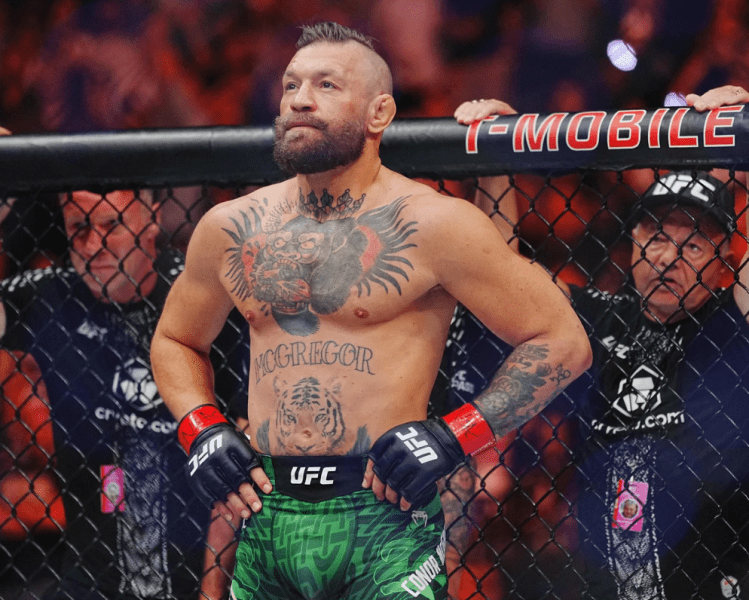
Characters: a fiery redhead, Conor McGregor
Genre: family saga
Setting: July 4th barbecue
Trope: a distracting fake fight
POV/tense: 3rd/past
The result:
“Who invited that asshole?” grandma asked.
“Shush, mom,” her son David said. “I think Tina brought him.”
“That no good daughter of yours,” grandma said. “She’s still working at that strip joint?”
“Mother. She’s not a stripper. How could you say that?”
“Well, she sure dresses like one.” Grandma took a drink of her beer and cackled so hard that her dentures slid partway out. She tucked them back in and resumed her laughing.
“Grandma, you can’t talk about women like that,” her grandson Robbie said. “It’s not respectful.
Grandma picked up her Marlboro reds and lit a cigarette. She took a draw and let out a hack. “In my day we didn’t have enough time or money to be dressing so fancy like that. Let alone bringing some random Irish gutter rat slash failed fighter to someone’s family party celebrating the founding of our country.”
She eyed Connor McGregor at the far end of the table, hot dog in one hand, tumbler of whiskey in the other. He caught her stare and he winked.
“Oh lordy,” she muttered.
He got out of his seat and swaggered over her way.
“Uh oh, grandma,” Robbie said. “You’ve done it again. Running your mouth and getting in trouble. He’s liable to punch you now.”
“That lug? He couldn’t land a blow on a drugged rabbit.”
Connor stopped beside grandma. “What’s that you’re saying about a drugged rabbit, missus?”
Grandma took a long drag and blew the smoke in his face. “I saw your last match,” she said. “Pitiful.”
Connor bopped from one leg to another. He cracked his neck and took a giant swig of his whiskey. “Wow. Huh. I always love myself a fiery redhead.”
Grandma patted her hair. “It’s fake, if you haven’t noticed. Much like your pre-match trash talk.”
“You’ve no idea how much work I put into my profession, missus.”
Grandma let out a ringing laugh. “Not much at all from what I’ve seen, you little prancing leprechaun.”
David piped up. “You’ll have to excuse my mother, Mister McGregor. She’s got a bit of dementia.”
Robbie scoffed. “Not likely. Grandma’s sharp as a knife. She’s always been like that. Saying the wrong thing at the wrong time. She keeps asking me when I’m going to bring my boyfriend around to meet her.”
“Well, when are you?” Connor asked.
Robbie sighed. “I’m not even gay.”
“Not yet,” grandma said. “Once he looks in a mirror, well then the jig’ll be up.”
She laughed even harder. Connor joined in.
“What are you laughing about?” she tells him. “That’s my grandson.”
“Sorry, I didn’t mean to offend.”
“You’re a pussy, McGregor. Just like I suspected.”
“I am not. Look at my ears.”
“Okay, you roided-out mick. You think you’re so tough? See if you can beat me.”
“What? No, missus. I’d never hit a woman.”
“I don’t mean that,” grandma said. “Cornhole.”
So the two of them staggered over to the cornhole boards and they celebrated America in the most wholesome of ways, and despite grandma’s trash talk, Conor McGregor cleaned her clock, and the two foul-mouthed heathens became the best of friends.
And nobody ever figured out who invited him to their family party.
Your life is an accumulation of choices you make along the way, small to large. Some you sense will be impactful. Others you have no idea. And then some things are beyond your control and they set you along a particular course. These things could be curses or they could be blessings.
In a sense, your fate—where you end up—becomes determined (preordained?) by all these choices.
This idea is captured by the six-episode TV show Half Man.
Before I get into describing and dissecting Half Man, a quick detour. I started the first episode blind. I got about ten minutes in and I was like, what the hell am I watching. I had to stop and do a little digging. Half Man is written by and stars Richard Gadd. He’s the guy behind Baby Reindeer, which came out a few years ago. I’d never seen it. Baby Reindeer was a huge hit, and I knew it was autobiographical, so rather than continuing with Half Man, I switched over to Baby Reindeer. I needed to know who the hell this dude was.
Baby Reindeer, which Gadd also wrote and stars in, is based on his real-life experience with a stalker. It was strange and great. Having dealt with a stalker myself, it left me unsettled. Like Gadd, I’d blamed myself for her actions, even though I deserved no blame, and I pitied her, even though she didn’t deserve it. In Baby Reindeer, Gadd shows pure human messiness. When I finished it I went back to Half Man.
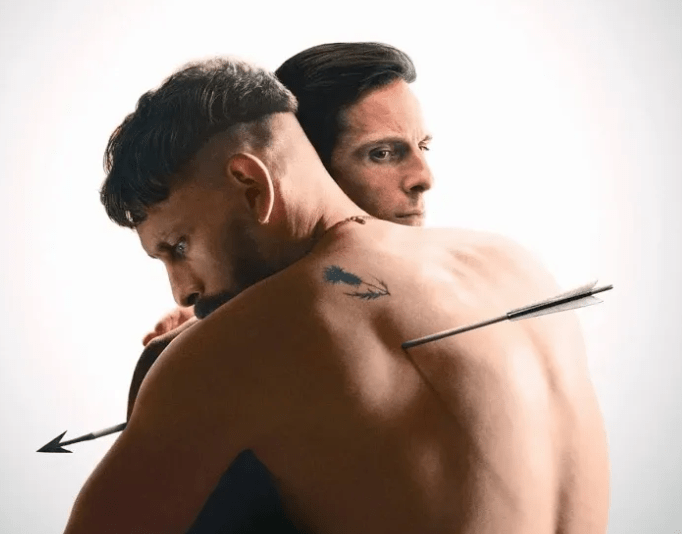
Half Man is the story of star-crossed step-brothers—Niall Kennedy and Ruben Pallister, whose mothers are lovers. The first three episodes focus on younger Niall and Ruben (Mitchell Robertson and Stuart Campbell), and the last three focus on them as adults (Jamie Bell and Richard Gadd). It follows Niall and Ruben from their teenage years to adulthood. Along the way, they become enmeshed and entangled, for better and for worse. Mostly worse. They have a genuine filial love for each other, but they’re also toxic due to Ruben’s control and Niall’s envy, and as their awful life choices compound, this toxicity turns to poison. Their fates catch up with them.
First, the acting. I can’t say who among the four is best. They’re all gripping, and the transition from younger to older is seamless. Jamie Bell and Richard Gadd are an interesting pairing. Bell, who plays Niall, is slight and disheveled while Gadd as Ruben is hulking and full of swagger. It’s jarring to see Gadd in this role following Baby Reindeer. It’s such a physical transformation, and it’s more than him just bulking up. I don’t understand how actors can pull that kind of transformation off.
I’ve watched Half Man twice now. The first go-around was brutal. Niall’s the main character. We walk through the story alongside him. We meet him at 15. His father died when he was a child and he lives with his mother, Laurie and her girlfriend Maura. Niall is nervous and frail and gets bullied. When he learns that Maura’s son, Ruben, is getting out of juvy and will be living with them, he panics.
Soon enough Ruben bursts on the scene. He is imposing and controlling and magnetic. Niall, who is just beginning to realize he might be gay, is drawn to Ruben, though not just physically. He’s terrified of Ruben, rightly, but enthralled by his bravado and presence. He craves Ruben’s attention. Ruben, in turn, becomes protective of Niall, though he insists everything be on his terms. This dynamic sets the course of their lives.
Niall is one of the more difficult protagonists I’ve seen in fiction. He’s needy, desperate, self-serving, and conniving. I don’t particularly like him. I can’t relate to him. But I can’t turn away from him. And Ruben is an asshole. He’s brutal, both physically and verbally. He’s so wounded that all he knows how to do is lash out.
What’s fascinating is their bond. On a surface level it can be read as homoerotic, especially since Niall, throughout the show, struggles to come to terms with his gayness. But their bond is deeper. They complete each other in a sense; each has what the other lacks. They know this on some level, which leads to a magnetic pull for closeness that’s ruined by envy and control.
Like Romeo and Juliet, Half Man is a tragedy. My first time watching it was all I could to to keep my heart rate down. The rewatch let me appreciate how Gadd cleverly constructs this story. For example, when Ruben first appears, he struts into Niall’s classroom. What is the teacher lecturing about? Romeo and Juliet, a foreshadow of what fate has in store for them.
Gadd leaves hints throughout the series. Early on, you know that something is very wrong with Ruben. I figured it was either one of two reasons: he’s either gay and in full repression mode, or he was molested. Turns out it was the latter. Gadd dropped these hints here and there, subtle but unmissable, so that when the reveal comes, it all feels earned. During some of Ruben’s violent outbursts, especially at the climax, you can even see Ruben perpetrate elements of his own abuse. Gadd makes it all feel real. And, strangely, he makes you feel some sympathy for Ruben.
Niall, too, is not without sympathy. Yes, he is so incredibly selfish that it’s hard to root for him. Either consciously or subconsciously, he deviously undermines Ruben. He’s self pitying. An eternal victim. At one point Ruben calls him King Rat. It fits. But Gadd also shows us how utterly alone and terrified Niall is. His mother Laurie is a textbook cold fish. While not cruel per se, she’s lacking in maternal instincts. Having that as a mother, having lost a father at a young age, and being bullied at school would naturally leave Niall at a severe deficit.
This ambivalence is a hallmark of Gadd’s writing, and maybe why I connect with it. Even in the relationship between Niall and Ruben, Gadd weaves the good with the bad. On one hand, Ruben threatens violence on Niall (and inflicts it). Niall schemes and lies to get back at him. But they also share a genuine closeness. On a school test, Niall cheats for Ruben so he won’t get sent back to reform school. Ruben teaches Niall how to box. Later on when Niall is down and out Ruben pays for his expenses, In another world, they could have been good for each other. But then Half Man wouldn’t have been half as compelling.
The writing consistently is terrific, and while I won’t go through all of it (watch it instead and see for yourself), I’ll cover the ending.
Even though you know they’re poisonous together, you want them to work things out (they come so heartbreakingly close). But with Ruben’s rage and Niall’s self-destructiveness, it can only end tragically. I can’t say the ending left me sad. No. Strike that. It did leave me sad. It didn’t have to be that way, but with the shitty hands they were dealt compounded by the shitty choices each of them made over several decades, Half Man could only end the way it did. Not every story earns a happy ending.
That calls back to the common thread I see in Gadd’s writing—he’s not afraid to portray ambivalence and ambiguity. People aren’t always 100 percent right or wrong. They’re complicated. Motivations, actions, impressions, all can be inconsistent. People and life can be messy and confusing. Gadd shows all of this. There are no easy answers and very few easy people.
Some of the press surrounding this show framed it as an examination of toxic masculinity. I hate that term. It’s a dismissive blanket statement, dismissive not just of men but of human experience. Yes, Half Man focuses on men and masculinity, but it’s a human story about how fucked-up people can end up fucking up other people, and each other. Sex/gender doesn’t matter. If Ruben had a better childhood, maybe he wouldn’t have been so brutal. If Niall could’ve been more self accepting, maybe he wouldn’t have been so destructive. To say that their toxicity is connected to their maleness doesn’t make sense, because they are males, so that’s the frame in which they can operate.
A final thing about Half Man. One of the themes Gadd touches on is loneliness. He gives us two boys who’ve suffered abuse and abandonment and are isolated. A lot of us have felt lonely in childhood and adolescence in one way or another. Both Ruben and Niall did, for different reasons. And like a lot of us, they struggled to fill that void of loneliness. Unfortunately for them, they each filled it with the worst possible person. Despite the tragic ending, I appreciate that Gadd was able to present this loneliness in such a relatable way.
The writer in me is impressed by what Gadd created in Half Man. The brutal honesty, the subtlety, the complexity, even the subject matter of a close and toxic relationship between two men. The viewer in me was drawn to a story about the need for connection, and how even if it all goes so horribly wrong, that doesn’t negate the need. Half Man is dark, it’s difficult, and it’s human.
There’s one theory on this for writers. Writers either draw inspiration from their inner worlds, or from the world around them.
Why not both at the same time?
For my story, Sueños, which was published here in the journal Empyrean, I used my own experience, and the outside world, to create this story.
First, what’s it about?
Dylan is a young soldier stationed in El Paso who has to drive across Texas for (…spoiler…) the funeral of his brother. Along the way his pickup truck breaks down and he’s forced to detour to the small town of Sueños, where he’s brought to a strange house for the birthday party of an unnaturally alluring woman named Veronica. There, he’s given a tempting choice: abandon his grief forever. But, of course, there is a price.
So where did the external inspiration come from?
Some years ago a friend loaned me a book of essays by a Mexican writer named Juan Villoro. Essays aren’t my typical thing, but his were great. One in particular stood out, his recollection of him as a young soldier. While going home one weekend, he gets sidetracked and ends up at a strange party where he meets a beautiful girl. It’s a story of idealized love captured in a moment of time, a story of endless possibility without the messiness of reality.
The story captivated me. I HAD to do something with it. Revisit it. Rework it. Repurpose it. I saw in it something hidden, something darker. Something supernatural, so I set about re-interpreting it through that lens. In the arts this is called interpolation, where an artist takes an existing work and fashions it into something new and different. Music does this a lot. If I was profiting off this story surely I’d be giving Señor Villoro a chunk of my earnings, but alas, zero divided by anything equals zero. (Don’t go into writing for the money.)
In terms of my interpretation, I added layers of menace and danger along with hints of vampirism. Who doesn’t love a good vampire tale? But I also chose to not be heavy handed.
What about my internal inspiration?
Ten years ago my father was killed in a plane crash. He piloted a small plane that failed upon take-off. Ironically, before he died I wrote a story available here about a guy who was left rich and rudderless after his parents died in a small plane crash. Obviously the worry was there in my mind before my father actually died. After his death I knew of course that this event would surface in my writing, but I never intentionally set out to write about it.
There was one strange thing that happened when my father died, and this is what I chose to focus on. At the time I was working in Manhattan. My mother gave me the call. I made it home to Jersey City and then got in my car to drive the 40 minutes to my parents house. On that drive it still wasn’t real to me. It was just a phone call. There was this great gulf of distance between me and the death, and my thinking was, as long as I am not at their house, it isn’t real. It didn’t even happen! I told myself that maybe I’d had some kind of psychotic break and made it all up (even though I knew that wasn’t true.) That distance gave me distance, which was exactly what I needed at the time.
It was all real, of course. Afterward came the usual stuff associated with a death in the family, the wakes and funeral mass and burial and the visitors and the paperwork and the concerns about the future and all of that. But for a 40-minute drive, none of it was real. I was living in a zone outside of time and life. That’s what I wanted to write about, that blessed denial you know isn’t true and won’t last. That’s where Dylan exists in Sueños, in a land of dreams, and whether he chooses to wake up or not, there will be a price. As one of my characters tells him, there’s always a price.
So my advice for writers out there is to study great writing and storytelling. Learn from it. Read, please. And don’t feel like you have to excavate the tragedies in your life, but don’t keep them buried either.
The challenge: write a short story in 20 minutes using the following:
Characters: Haunted house historian, Dumb blonde
Genre: Steampunk
Setting: A church
Trope: Curse of the pharaoh
POV/tense: 3rd/future
The result:
Veronica Cespides will fume with hate for her hair. She’d gotten it dyed by a new woman in her salon, a woman who apparently was too afraid of burning Veronica’s scalp, so instead of platinum it was more like yellowish with a tinge of fire hydrant red.
No one would take her seriously now.
Not like it mattered.
She’ll stand at the entrance of Saint Mary’s of the Sky, one of the oldest churches in the city, ensconced in a blimp soaring above the river. She’ll adjust her bustle and check her pocket watch.
He’s late, she’ll fume silently.
Just as she’s about to power up her jet-pack and steam back to solid ground a hand will tap her on her shoulder. She’ll turn and stare into the eyes of a balding man in an ascot with a monocle. Not stare into his eyes exactly but more like stare down at his eyes.
“Hello, I am Rupert Kenmore. You must be Veronica.”
“No, I am not Veronica. I am…” she’ll fumble for a moment. “I am Mary Skyship.”
He’ll laugh. “Ah, that’s a good one. No, seriously, you are her. I’ve seen your daguerreotype. But I thought you were blonder.” His laugh will falter at her stony reaction. “Well,” he’ll say, “not the best start to a blind date.”
“Blind?” she’ll ask. “I’m so sorry. I didn’t realize you were blind. It’s amazing how you can train your eyes to look directly into mine. Did they teach you that at blind school? Or is it a hearing thing.”
He’ll laugh with more certainty. “I love a woman with a sense of humor. Then he’ll loop his arm around hers. And what is it you do again, Veronica, aside from looking so effortlessly stunning?”
“I spend a lot of time on charity work. Mostly dogs and cats that are missing a paw. Paws for Pets. They make the most stunning mechanical limbs for our furry friends. Really it’s amazing. And it’s heartwarming to know that I’m making such a huge difference in the world.”
He’ll clear his throat. “Yes, yes, that is amazing. You must be well positioned in life.”
“If you can call it that,” she’ll say. “My father was on one of the expeditions to the pyramids. Apparently there was some sort of curse in one of the tombs and that nasty pharaoh did a job on my father. He came back and fell ill. He swelled up like a rotten potato. Then, boom. He exploded all over the hospital. I was in tears for days. But he set me up for life. So now I can help those poor poor pawless pets.
Rupert will get excited. “Curse of the pharaoh? You have to tell me more. I’m so interested in such supernatural occurrences.”
“Are you? Really?”
“Yes of course. Didn’t your friend tell you about me?”
“She said you were taller. And had more hair.”
He’ll brush her words aside. “Such superficial matters. Anyway. I’m a haunted house historian. I travel the country seeking out the strange and unexplained. I’ve even seen a ghost.”
“A real one? What was his name?”
He’ll laugh. “Ghosts don’t talk. They only moan.”
“Oh, that’s so disappointing. Tell me, Rupert, why did you ask to meet me here at this old abandoned church of all places?”
“To explore, of course. Abandoned churches are the best hunting grounds for ghosts. Especially this one. Did you know why St Mary’s of the Sky is abandoned? There was a satanic ritual that was held here. Four people sacrificed on the holy altar. And I’m here to investigate.”
“Oh that sounds so thrilling.” She’ll look at Rupert with slightly different eyes. “He’ll seem a little taller, and his hair, well it’s more distinguished.”
“Promise me this, Rupert, if we find ghosts here, can we ask their names? I’ve always wanted to talk to a real live ghost.”